

Rebel Bunny Matcha
A social-first Shopify Hydrogen storefront spanning DTC, wholesale, and education.
Role
Shopify Developer
Industry
Premium matcha, DTC, and wholesale
Context
Rebel Bunny content-commerce and limited drop UX case study
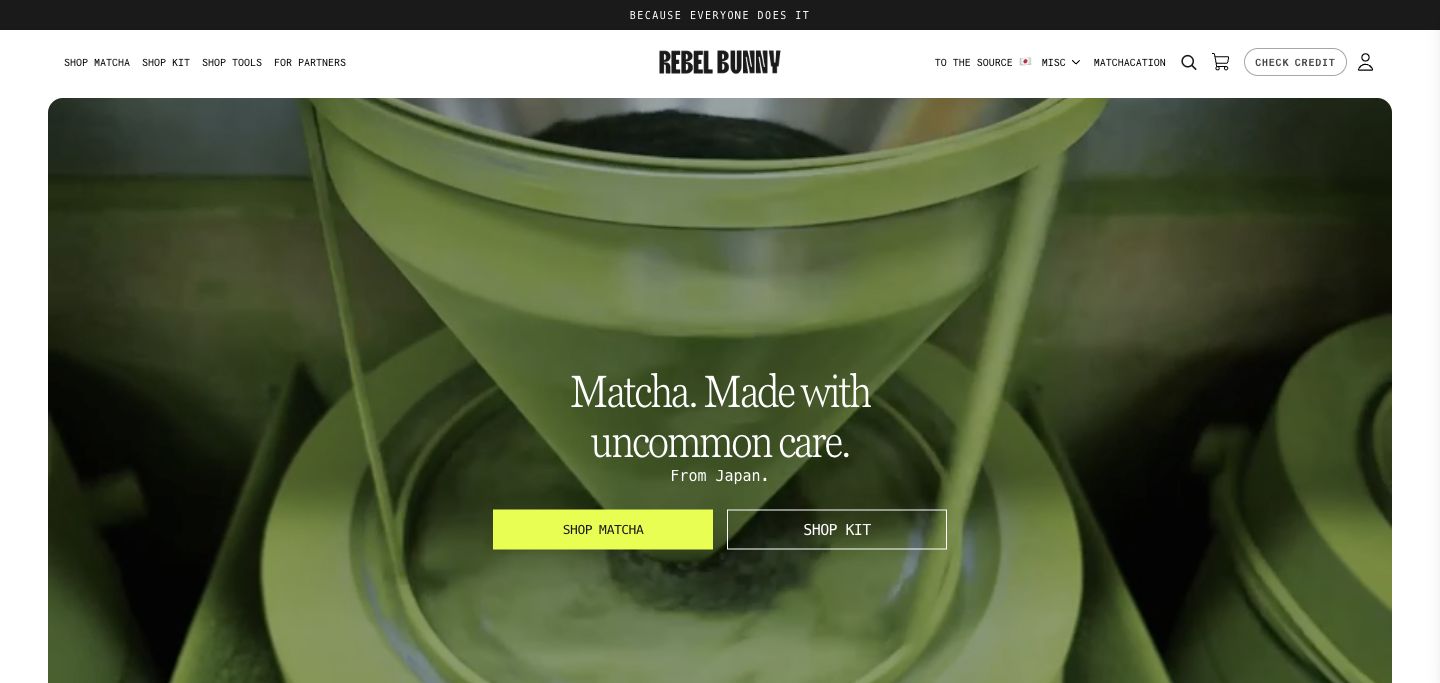
A premium matcha brand needed one branded Shopify storefront to carry DTC shopping, wholesale or partner interest, and education without splitting those journeys into disconnected surfaces.
Problem
Rebel Bunny is a premium matcha brand with a storefront that has to do more than sell tins of tea. The public site combines direct-to-consumer shopping, limited drop energy, cult classic products, a partner flow for premium cafes and artisan brands, Matchacation education, and To The Source origin storytelling. That creates a very different storefront pressure from a standard DTC theme build. Mobile presentation matters because discovery is social and creator-led, but the site also has to hold product detail, brand story, education, and partner acquisition together without feeling fragmented.
My responsibility and approach
My role was storefront development for a bold, conversion-oriented Shopify build with custom product templates, promotional surfaces, and cart and checkout flows optimized for mobile and desktop. The public stack details on my CV list Shopify Hydrogen, React, Remix, GraphQL, TypeScript, and JavaScript for this project, while the live site itself shows the shape of the work: a DTC shop, a partner application path, and Matchacation content all living in one branded system. Rather than splitting those experiences across disconnected tools, the implementation keeps them inside one coherent storefront. That is the kind of setup where Hydrogen earns its complexity: when brand, education, and commerce need to move together instead of being bolted on later.
Constraints
- Social-first discovery made mobile presentation and brand energy especially important.
- Limited drops and cult classic products needed product storytelling that could still sell.
- Commerce, education, and partner acquisition had to live together coherently.
- Custom product templates and promotional surfaces needed to support conversion without flattening the brand.
Technical decisions
- Use Shopify Hydrogen, React, Remix, TypeScript, GraphQL, and JavaScript for a custom storefront system.
- Keep DTC shopping, partner application flow, and Matchacation content inside one coherent brand experience.
- Build custom product and promotional surfaces across mobile and desktop instead of relying on a generic theme flow.
SEO and performance risks
- Educational content needed to be visible inside the storefront, not hidden in disconnected landing pages.
- Mobile performance and clarity mattered because social traffic often arrives on small screens.
- The brand, product, and partner journeys needed route-level clarity so crawlers and shoppers could understand the site.
Implementation
What shipped and why it mattered.
The implementation covered custom storefront development, mobile and desktop presentation, promotional surfaces, product templates, cart and checkout flows, and branded content paths inside one Hydrogen-powered commerce experience.
Result
When commerce, education, and partner acquisition must work as one system, keep those journeys in a coherent Hydrogen storefront rather than disconnected tools. Rebel Bunny carries shopping, partner interest, and Matchacation content in one branded surface, making it a useful example of Hydrogen for social-first DTC.
One branded storefront surface for DTC shopping, partner interest, and education.
Custom product and promotional surfaces shaped around social-first discovery.
5.0 Upwork feedback for the custom Hydrogen storefront work.
Screenshots
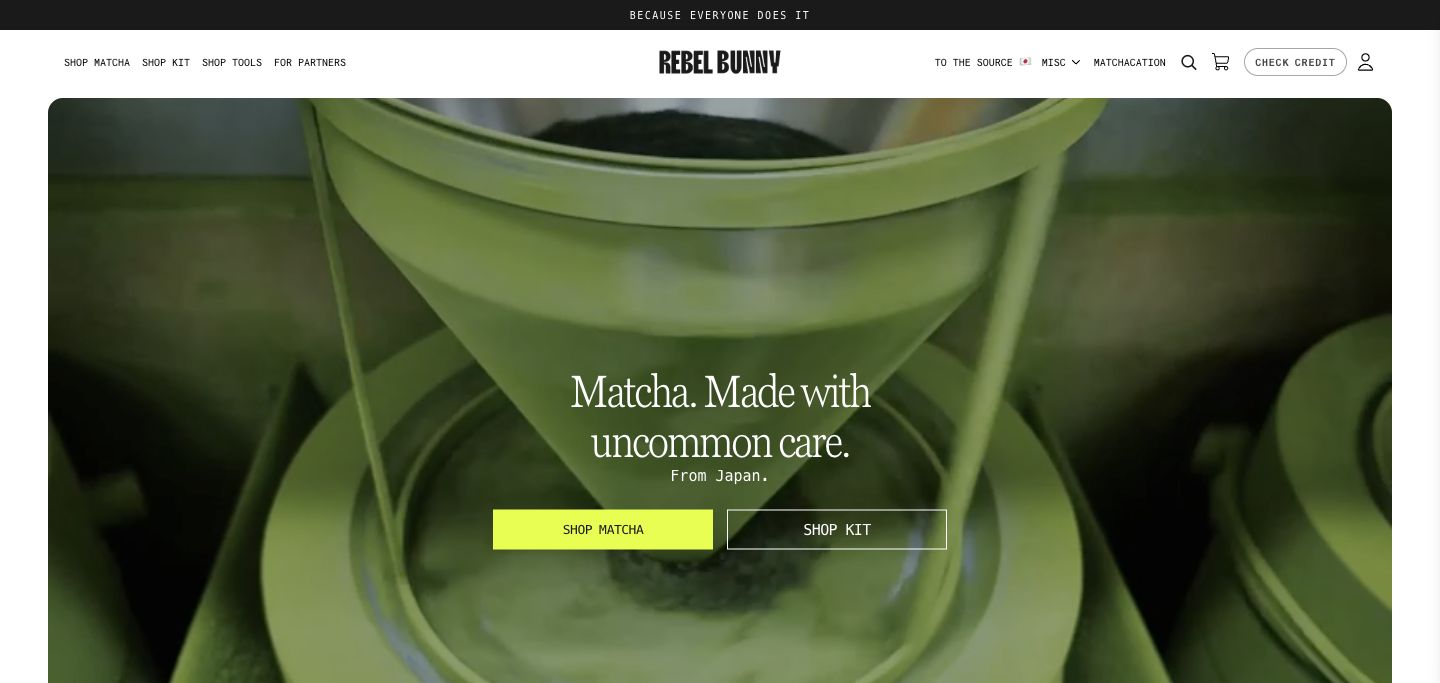
Visual proof
Client feedback
Upwork feedback
5.0
Tech stack
What the implementation sat on
Client feedback
"Emre is a fantastic developer and an even better human."
Rebel Bunny client - Shopify Hydrogen storefront client, Rebel Bunny Matcha
Upwork feedback, May 3, 2026Is this relevant to your store?
Growth Storefront proof - DTC, education, partner flow, cart UX
Shopify Developer across Shopify Hydrogen, React, Remix, TypeScript, GraphQL, JavaScript.
Need a leaner version of this? View Hydrogen packages from $2K-$5K.Relevant paths