

Bayam Jewelry
A Shopify Hydrogen storefront for luxury jewelry, watches, and showroom-led trust.
Role
Shopify Hydrogen Developer
Industry
Fine jewelry and luxury watches
Context
Bayam Jewelry high-AOV luxury ecommerce discovery case study
A luxury jewelry and watch retailer needed a Hydrogen storefront that could support premium browsing, showroom-led trust, and multiple catalog mindsets inside one brand surface.
Problem
Bayam Jewelry operates out of NYC's Diamond District and sells real gold jewelry, diamonds, and luxury watches. The storefront had to balance two different discovery behaviors in one surface: jewelry buyers often browse by style, gifting, and taste, while watch shoppers compare by brand, condition, and model-specific details. The public store also carries trust signals such as 0% APR financing, free shipping, and free returns, so the experience needed to make those buying assurances easy to understand without turning the page into a generic promo surface. The challenge was less about adding more pages and more about making premium discovery feel coherent.
My responsibility and approach
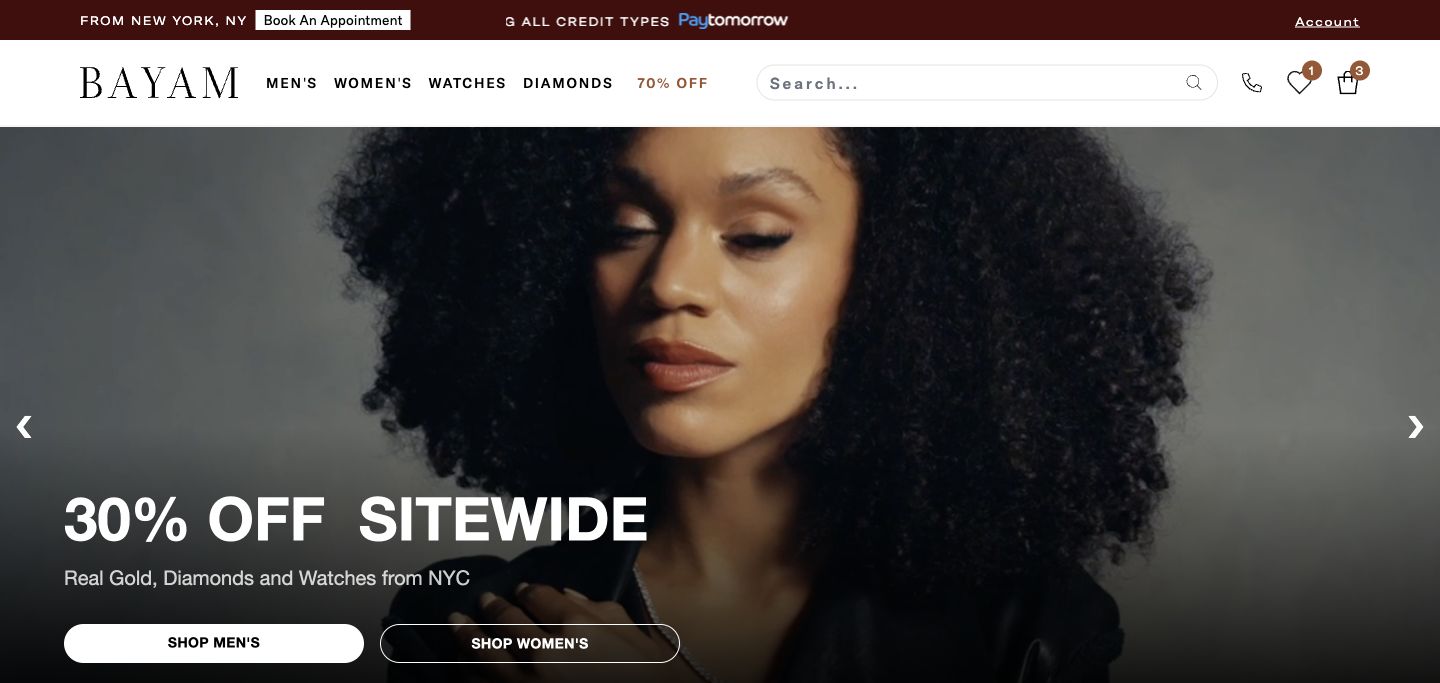
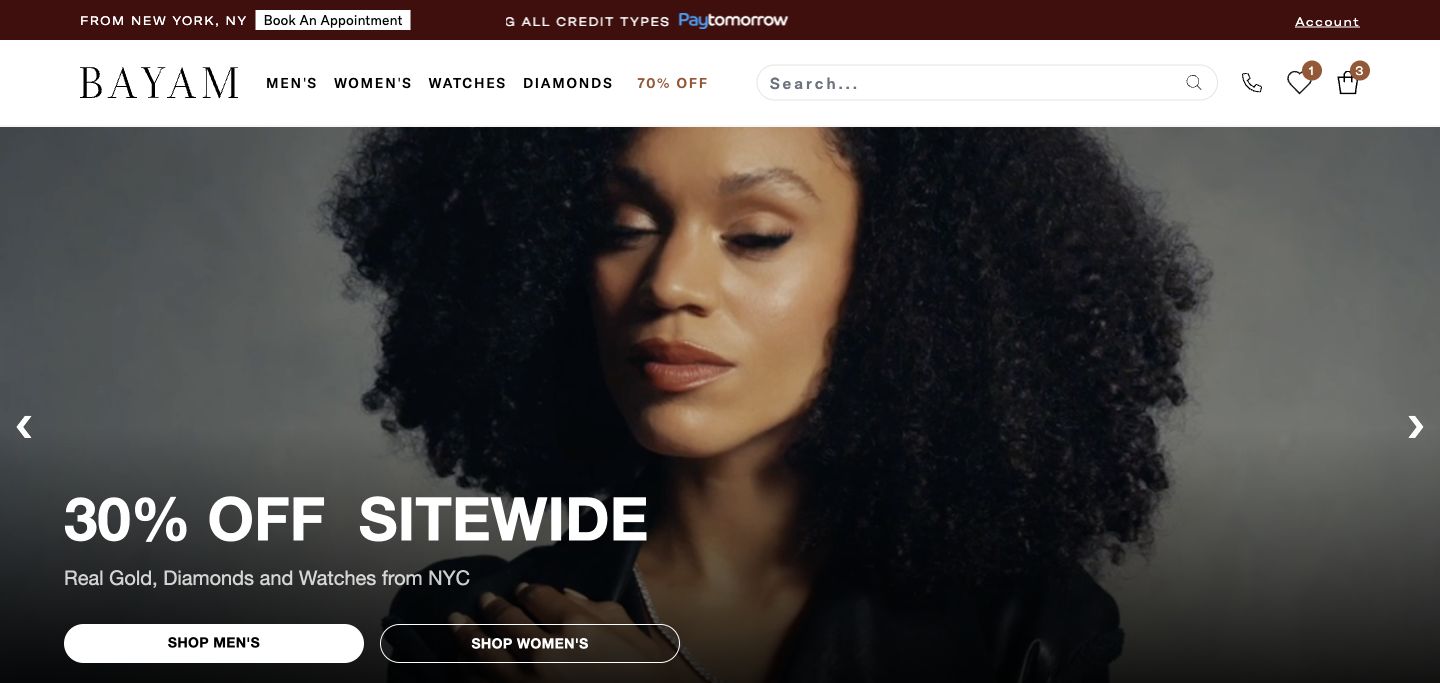
I built and refined Bayam as a Shopify Hydrogen application with a strong emphasis on performance, responsiveness, and design cohesion. In the public updates I shared about the project, two changes capture the direction well: refreshing the homepage hero to strengthen the first impression, and adding collection intros plus sub-category pathways to make browsing clearer. That work mattered because Bayam is not a single-category brand. The storefront has to carry gold jewelry, diamond pieces, and luxury watches in one experience while preserving a premium tone. The implementation focused on cleaner navigation, clearer collection context, and a more intentional luxury feel instead of treating discovery like a flat theme menu.
Constraints
- Jewelry and watch shoppers compare products differently.
- High-AOV buying decisions need financing, shipping, return, and product-trust signals to be visible without cheapening the brand.
- The storefront needed to feel premium without hiding useful product context.
- Collection browsing needed clearer entry points than a flat category surface.
Technical decisions
- Use Shopify Hydrogen for a custom storefront surface instead of forcing luxury discovery into generic theme patterns.
- Strengthen the homepage hero and collection intros to improve first impression and browse clarity.
- Add sub-category pathways so jewelry, diamond, and watch browsing could stay coherent.
SEO and performance risks
- Jewelry and watch collections needed separately crawlable introductions that explain each catalog's distinct buying context.
- Product discovery had to support different search behaviors across jewelry and watches.
- Visual refinement could not come at the cost of mobile responsiveness or crawlable collection copy.
Implementation
What shipped and why it mattered.
The implementation focused on the Hydrogen storefront layer, responsive UI, homepage presentation, collection context, and browse paths that make the mixed luxury catalog easier to understand.
Result
When jewelry and watch buyers share a storefront, give them distinct discovery paths. Collection introductions and sub-category pathways should explain what each buyer needs to compare, while premium presentation keeps useful product context and financing, shipping, and returns cues visible.
Use collection introductions and sub-category pathways to guide jewelry browsing by style and gifting, and watch comparisons by brand, condition, and model.
Keep financing, shipping, and returns cues easy to find during high-AOV buying decisions.
Carry a premium presentation across jewelry and watches without hiding useful product context.
Screenshots
Visual proof
Tech stack
What the implementation sat on
Is this relevant to your store?
Growth Storefront proof - premium catalog, discovery, trust UX
Shopify Hydrogen Developer across Shopify, Shopify Hydrogen, React, JavaScript, Responsive UI.
Need a leaner version of this? View Hydrogen packages from $2K-$5K.Relevant paths